

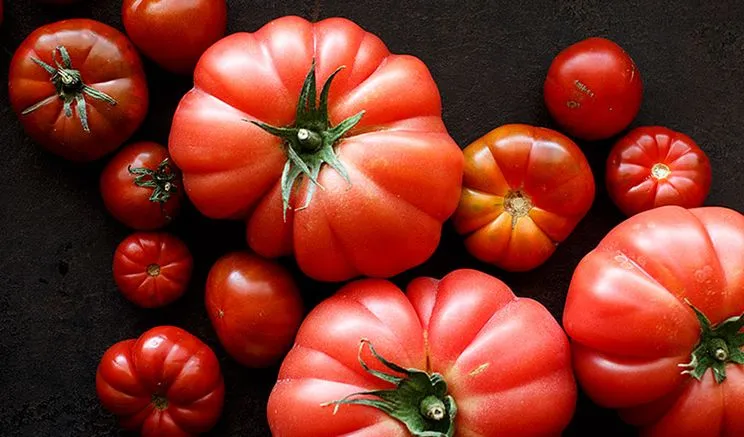
Within the framework of the international scientific project HARNESSTOM, implemented under the EU Horizon program, a multifunctional collection of 226 traditional tomato varieties has been formed for studying agricultural traits and genetic variability. This is discussed in an article published in the journal “Plantator”. During the research, scientists identified 141 quantitative trait locus (QTL) associated with productivity, stability of traits, and their reaction to environmental conditions. Simultaneously, within the project, tastings are being conducted involving farmers, experts, and consumers – over 3,000 participants have already joined to evaluate the taste qualities of tomatoes. As a result of the work, an open database called HarnesstomDB was created, which combines genetic, phenotypic, and metabolomic data. It contains information on more than 17,600 tomato samples, over 127,000 genetic markers, and hundreds of fruit quality indicators. The platform is open for public use and designed to support selective breeding programs and the development of climate-adapted tomato varieties.
In addition, new solutions by alfa smart agro for stable crop protection have also been announced.
The article concludes with the creation of an open database that will be used to support research on tomato genetics, improve breeding programs, and develop tomato varieties adapted to climate change. The database provides a wealth of information about traditional tomato varieties, their genetic makeup, phenotypic traits, and metabolomic data. This information is crucial for understanding the genetic basis of tomato productivity and stability, as well as for developing new, resilient tomato varieties that can withstand changing environmental conditions.
Висновок: The international project HARNESSTOM has created an open database containing genetic, phenotypic, and metabolomic data on over 17,600 tomato samples. This database will support research on tomato genetics, improve breeding programs, and develop tomato varieties adapted to climate change. The project also involves tastings with farmers, experts, and consumers, with over 3,000 participants already involved. The database contains information about more than 127,000 genetic markers and hundreds of fruit quality indicators.